How Do You Flush a Water Heater?
To flush a tank water heater, turn off the power or set the gas to Pilot, let it cool, close the cold valve, and drain the tank through a hose. Open the cold valve in short bursts to stir up sediment until the water runs clear. Then close the drain, refill, and turn the heat back on.
The whole job takes about an hour of hands-on time for most 40- or 50-gallon tanks, plus waiting for the water to cool and reheat. You don't need special tools. You do need to follow the order below, because two mistakes cause most of the trouble: getting scalded, and turning an electric heater back on before the tank is full.
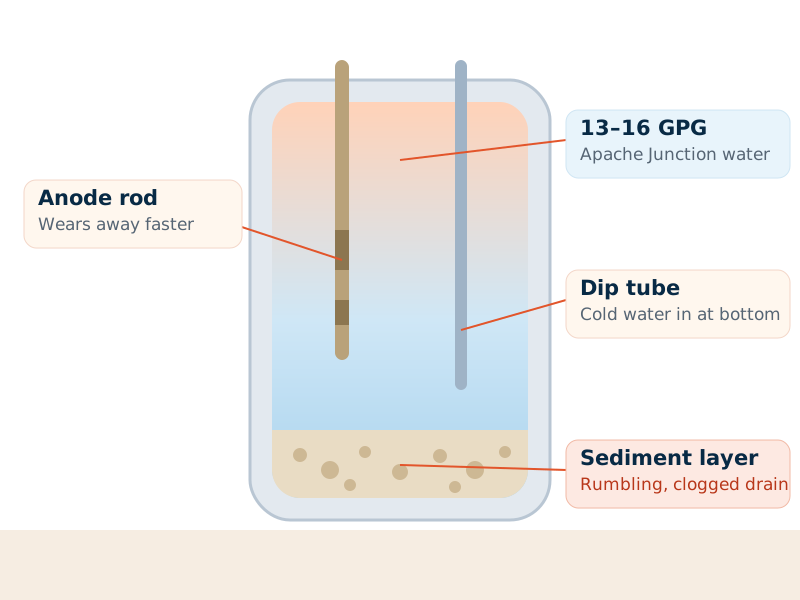
In very hard water, like the 13–16 grains per gallon in Apache Junction, a yearly flush keeps sediment from piling up and hardening. If you'd rather have it done for you, with the anode and relief valve checked at the same time, see our water heater flush service.
Before You Start: Safety and Tools
Safety: Water in the tank can be 120°F or hotter and can scald in seconds. Let it cool for a few hours, or overnight, before draining. Never switch an electric heater back on until the tank is completely full. A heating element that runs dry burns out in moments.
What do I need to flush a water heater?
- A garden hose long enough to reach a floor drain, the driveway or a spot outside that can take hot, gritty water
- A flathead screwdriver or adjustable wrench, depending on your drain valve
- A bucket, to check how clear the water is running
- Gloves and old towels
- A hose cap or drain valve cap, in case the valve won't close fully afterward
Should I check anything before I open the drain valve?
Yes. Look at the valve itself. A plastic drain valve on a tank that's 10 or more years old and has never been drained is the one case where we'd stop and think. Packed sediment can keep an old plastic valve from sealing once you open it. If that's your setup, read the troubleshooting section below first, or have the valve replaced with brass before you flush.
Also make sure the cold-water shutoff above the heater actually turns. If it's stuck or doesn't fully stop the water, don't force it. Our guide on shutting off a water heater covers what to do when a valve won't cooperate.
Step-by-Step: Flushing a Tank Water Heater
- Turn off the heat. Electric: switch off the water heater breaker at your panel. Gas: turn the gas control knob to "Pilot" (or "Vacation" on some models). Tankless units are different; see the last section.
- Let the water cool. Wait a few hours, or run hot water at a tub for 10 minutes or so to bring in cooler water. Cooler water is safer to handle and easier on a plastic drain valve.
- Close the cold-water supply. Turn the valve on the cold pipe going into the top of the heater clockwise until it stops.
- Open a hot tap. Open a hot faucet in a sink or tub near the heater. This lets air in so the tank can drain instead of holding the water in with a vacuum.
- Connect the hose. Thread the garden hose onto the drain valve at the bottom of the tank and run the other end to your drain or outside. Keep the outlet lower than the valve so it drains well.
- Open the drain valve. Turn it counterclockwise with a screwdriver, wrench or the handle. Let the tank drain. Expect cloudy water and white or tan grit at first.
- Stir up the sediment. Once the tank is mostly empty, open the cold-water valve for a few seconds, then close it. Repeat several times. The fresh water churns the bottom and pushes more grit out the hose.
- Check it in a bucket. Point the hose into a bucket now and then. When the water comes out clear, with little or no grit settling, you're done flushing.
- Close the drain and refill. Close the drain valve snugly (don't overtighten a plastic one), remove the hose and open the cold-water valve fully. Leave the hot tap open until water flows smoothly with no spitting air.
- Turn the heat back on. Electric: only now switch the breaker back on. Gas: turn the knob from "Pilot" back to "On" and set the temperature. About 120°F is what the DOE suggests for most homes.
Is flushing a gas water heater different from an electric one?
Only at the start and end. On gas, you set the control to "Pilot" so the burner won't fire while you drain, then back to "On" when it's full. If the pilot goes out while you work, relight it using the label on the tank. On electric, the breaker stays off the whole time. That's the most important rule in this guide.
When the Flush Doesn't Go to Plan
Most flushes are boring. When one isn't, it's usually one of these.
What if the drain valve won't close all the way?
Grit is probably stuck in the valve seat. Open it again for a few seconds to flush the grit through, then close it. If it still drips, screw a hose cap onto the outlet to stop it for now. A dripping drain valve isn't an emergency, but it won't fix itself. Our page on a leaking drain valve explains why it happens, and a brass drain valve replacement is the long-term fix.
What if the water won't drain, or barely trickles?
Sediment may be blocking the inside of the valve. First, check that a hot tap is open and the hose isn't kinked or running uphill. Next, close the drain, open the cold supply for a few seconds to build pressure, then open the drain again. That pressure flush through the cold side often pushes the clog out. If nothing works, close everything, refill the tank and call a pro. Don't poke wire into a valve on a full tank.
The water still isn't clear after a long flush. Now what?
Some sediment has hardened into a crust that won't wash out. A few more cold-water bursts may help. If it's still cloudy after 20 or 30 minutes, stop. You've removed what a flush can remove.
Why is there no hot water after flushing?
On electric tanks, the most common reason is turning the power on before the tank was full, which burns out the upper element. On gas tanks, the pilot may have gone out. Air in the lines can also make the first few minutes sputter. If a relit pilot or a full tank doesn't fix it, call us.
How to Tell the Flush Worked
- Rumbling or popping is quieter or gone when the heater runs
- Hot water lasts longer through showers
- Fewer white flakes in faucet aerators and showerheads
- No drip at the drain valve a day later (check with a dry paper towel)
If the noise doesn't change at all, the sediment may have hardened, which is common on older tanks that were never flushed. That's a good time to have someone look at the anode rod too. A rod worn to its core wire means the tank has lost much of its protection. Our anode rod replacement page explains what's involved.
Tip: Write the date on a piece of tape on the tank after each flush. Next year you won't have to guess.
What About Tankless Water Heaters?
Tankless units don't have a tank to drain. Instead, they get descaled. With the power off and the isolation valves closed, a small pump circulates white vinegar or a descaling solution through the heat exchanger for about an hour, then the unit is rinsed with fresh water and the inlet screen is cleaned. In hard water, once a year is a common schedule.
If your unit doesn't have isolation valves, descaling is harder and they're worth adding. If it's already showing error codes or cold bursts, see our tankless water heater repair service.
When to Call Instead
Flushing is a fine DIY job on a healthy tank. Call a pro if the tank is very old and never drained, the drain valve is old plastic, the cold-water valve won't shut, or you see water coming from the tank body. That last one is a leak, not a maintenance job, and our Apache Junction leak repair page explains the next steps.
Apache Junction Water Heater Pros is open 24/7 at (480) 555-0147. For more quick answers, browse our water heater FAQ.
Flushing a Water Heater: FAQs
How long does it take to drain a 50-gallon water heater?
Draining alone usually takes 20 to 40 minutes through a garden hose, depending on water pressure and how much sediment is near the valve. Add time for cooling beforehand, the cold-water bursts, refilling, and an hour or more for the water to reheat.
Can I flush a water heater without turning off the water?
Some people do a quick "mini flush" by opening the drain for a few gallons with the cold supply on. It clears a little loose grit near the valve. A real flush needs the cold supply closed so the tank can empty and the bursts can stir the bottom.
Where should the drain water go?
A floor drain, laundry drain or a spot outside where hot, mineral-heavy water won't harm plants or run into a neighbor's yard. Many people run it down the driveway. Keep the hose end lower than the valve so gravity does the work.
Is it bad if a lot of sand-like grit comes out?
Not by itself. That's hard-water sediment, and getting it out is the point of flushing. If you see black specks or bits of white plastic, the plastic may be from a broken dip tube, which is worth having checked.
Do I need to flush a brand-new water heater?
Not right away. A new tank has no sediment yet. Plan the first flush about a year after installation in hard water, and set a reminder so it becomes a yearly habit.
Can flushing an old water heater make it leak?
Flushing doesn't create tank leaks, but on an old tank it can disturb sediment that was sitting against a weak spot, or leave grit in a plastic drain valve. That's why very old, never-flushed tanks deserve a look before anyone opens the valve.